Science and art seem to be irrelevant. Science is data-driven, objective and rational, while art is emotion-driven, subjective and perceptual. But in fact, science and art have never been completely separated, but complement each other for mutual achievement.
Ancient Greek artists used the mathematically defined golden ratio to give their artwork a sense of beauty in proportion, laying the foundation stone of Western classicist aesthetics. During the Renaissance, Leonardo da Vinci was both a great artist and a great scientist in his time. The human anatomy and mechanical inventions, or scientific principles and realistic techniques of light, shadow and focal perspective in his manuscripts, all embody the perfect combination of science and art.
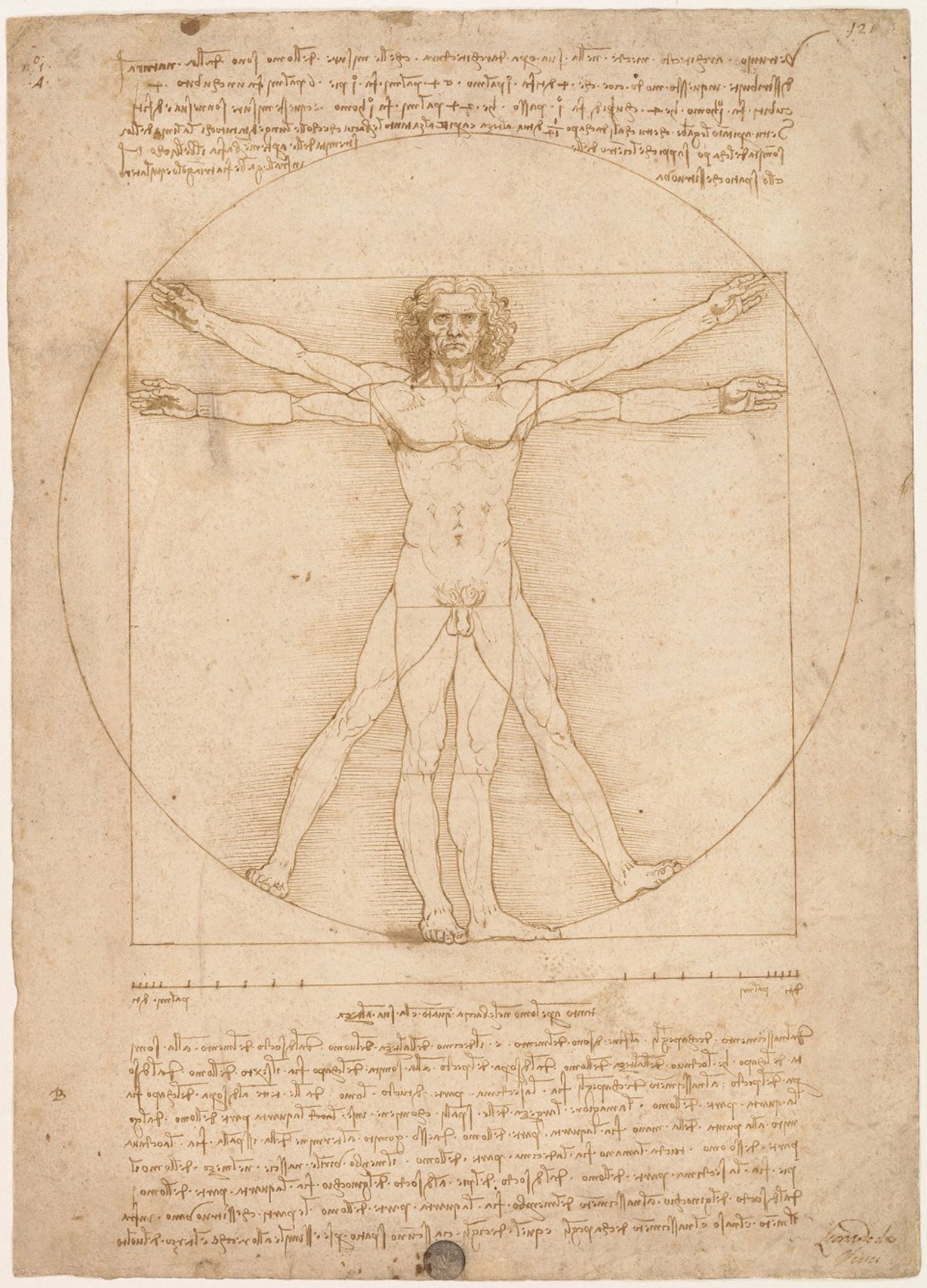
In his drawing The Vitruvian Man, Leonardo da Vinci combined the foundation of beauty (body and proportion) with geometry principles (circle and square).
Today, anyone working in fields of science or art understands that the similarities between their working principles far outweigh the differences, not as believed in people's stereotypes. For example, the scientist’s laboratory and the artist’s studio are both the last garden of Eden reserved for open exploration. Both continuously improve themselves through the feedback loop of thinking-action-reflection-reaction, and are committed to answering the major question we humans are facing - how can we drive the society forward?
In the education system, more countries are beginning to adopt STEAM rather than STEM curriculum, adding "Arts" to "Science, Technology, Engineering and Mathematics” in the hope that students focusing on science and technology can be also benefited from art education.
The French writer Flaubert once said: “The farther, the art becomes more scientific, and science more artistic: having parted at the base, they will meet someday at the top.”
So how can art benefit scientists?
Art makes scientists more creative
Usually, science is believed to primarily involve "critical" rather than "creative" thinking. But in many cases, critical thinking itself may not result in great progress in science. A good example is Bohr's atomic model. In 1913, Bohr needed a new theory to improve the classical planetary model to explain the irregular movement of electrons. And "Cubism" at the time represented by Picasso inspired Bohr.
Bohr believes that the trajectory of electrons is not as regular as the orbit and instead affected by our observation behavior. They are like the blurry brushstrokes or deconstructed paintings by Picasso or Braque, which only make sense when you stare at it long enough. This abstract atomic model paved the way for a great leap in quantum physics.
Cubism art inspired Bohr's creative thinking.
Image source: Ma Jolie, 1911-1912 by Pablo Picasso
We are not saying that Cubism, created Bohr's. But the important thing is that the art works inspire the creative thinking of scientists and open up their horizons. In these spaces, new ideas about how the physical world works are more likely to emerge.
Art can polish skills in scientific research
Craftsmanship can help scientists deepen different understandings of the same object. Scientists in the field of materials, if trained in art, design, and textiles, would acquire the skills to understand materials intuitively. For example, even if materials scientists lack an equation that describes the casting process like engineers do, they know that metals are cast too soon will crack. Meanwhile, art training arouse their curiosity. Although no one has systematically studied the taste of metals, scientists are likely to know that copper and zinc are bitter, while gold is almost odorless. These factors will affect our perception of the taste of food when using tableware in our daily lives.
The practical ability is crucial in scientific research. Strong hands-on capability not only ensures the success of the experiment, but also allows different scientists who follow the same method to obtain similar experimental results, which solves the problem of reproducibility in scientific research. Whether handicrafts or playing musical instruments, these "hands-on" artistic hobbies help scientists perform laboratory tasks more effectively. More interestingly, social psychologists have found that practising piano can exercise a person's delayed gratification and make scientists more patient in scientific research.
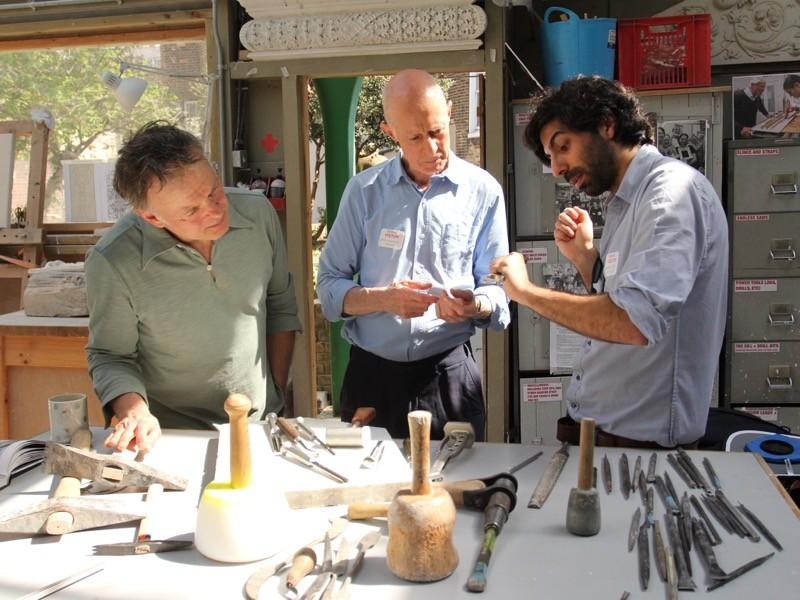
Scientists explores parallels between stone carving and orthopaedic surgery.
Image source: Nature/Danuta Kneebone
Art allows scientists' research advances to have a broader application scenario
Science, art and the "capital" of science have become stronger through close cooperation, bringing more innovation in the business world. The Rhode Island School of Design (RISD) has an initiative to hire artists and designers to promote scientific innovation and explore the possibility of combining art with science and technology at all stages of education. The RISD program includes collaboration between ecologists and design students to create more environmentally friendly biological materials.
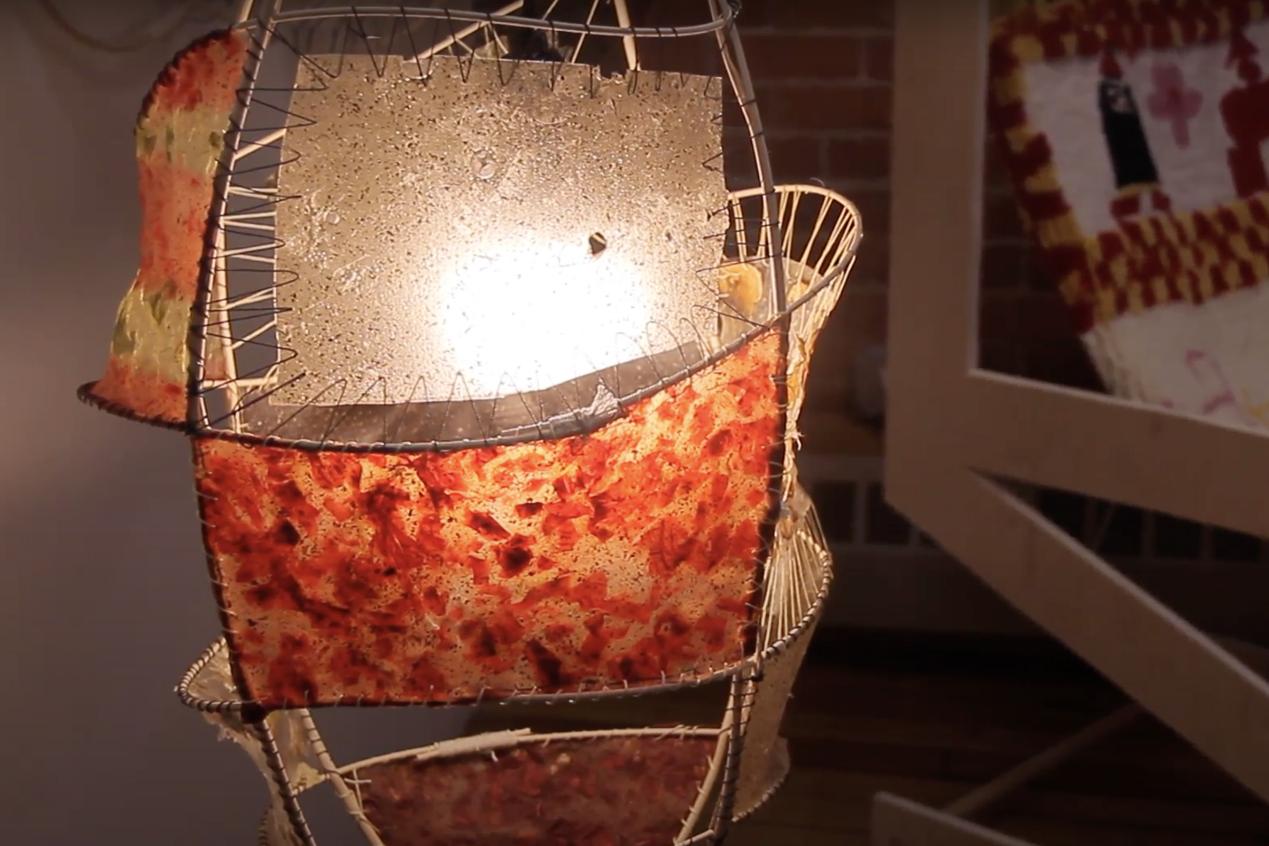
Lamp decorations made by mycelium.
Image source: RISD
The potential collaboration also been applied to the fashion industry. The smart fabric designed by CuteCircuit, a London-based technology and fashion company, integrated thousands of micro LEDs into the fabric, allowing the clothes to change colors and patterns. With the progress of nanotechnology, this "smart fabric" may evolve into a more dramatic work. For example, the evening gown in the picture below has sensors in its fabric. When the model moves, these sensors interact with the luminescent embroidery. The faster the movement, the brighter the embroidery, transforming dynamic movement into color and pattern designs.

Image source: CuteCircuit
Art helps scientists better communicates
The last and most important step in the scientific process is to convey the results of scientific experiments. The widespread dissemination of scientific discoveries, especially the popularization of science for the general public, can raise public attention towards new knowledge, increase the interaction between scientists and the public, and create an atmosphere of rational thinking and scientific innovation.
Art can provide a powerful and rich media for science communication. Collaboration between scientists and artists is blooming all over the world, and everyday content posted under the hashtag #SciArt on social media shows that these two very different fields are merging in very fresh and exciting ways. Science has been transformed into a fascinating art, enabling more public participation which subsequently nurtures scientific education among the public.
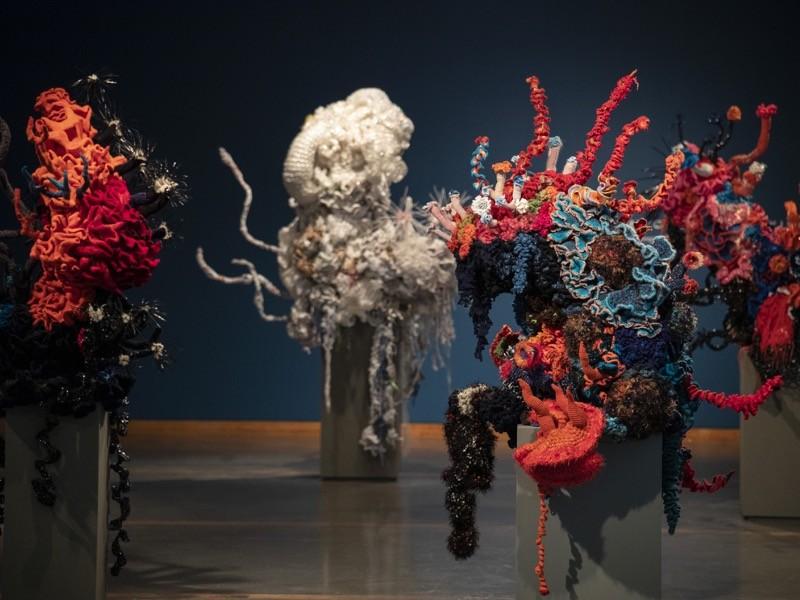
Yarn art illustrates the effect of climate change on corals
Image source: Stephanie Veto/Lehigh University Art Galleries
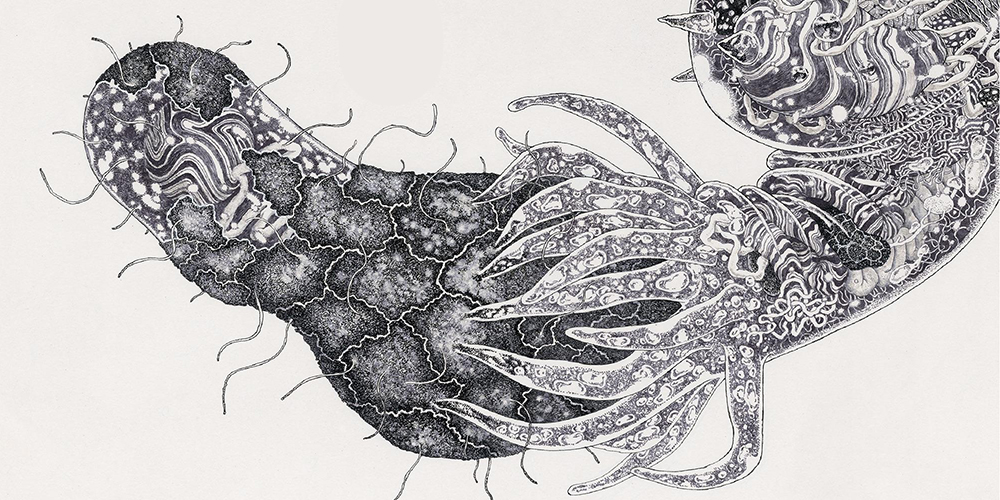
Illustrations of immune cells
Image source: Meiji/Kaibutsu
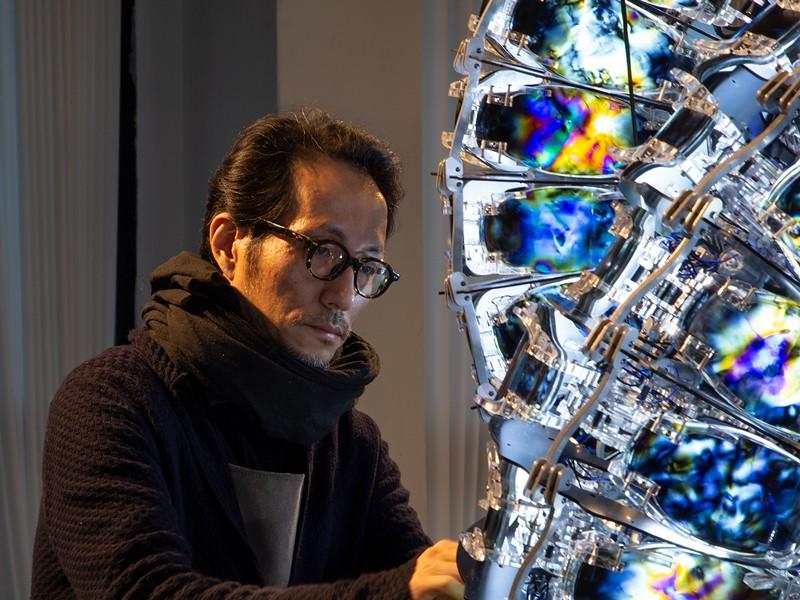
Structure of laminated polymer in the form of a torus knot
Image source: Yeongho Kim
Whether it is science inspired by art or art as a tool to explain science, it is believed that the boundary between the two will become more blur, and there will be more collaborations between scientists and artists. The integration and stimulation of science and art will help scientists better explore the future.








 Facebook
 Linkedin
 WhatsApp